LFT Carbon Fiber Injection Molding Materials
High-performance thermoplastic composites with 5–25mm fiber retention — delivering superior strength, toughness and fatigue resistance for metal-replacement applications.
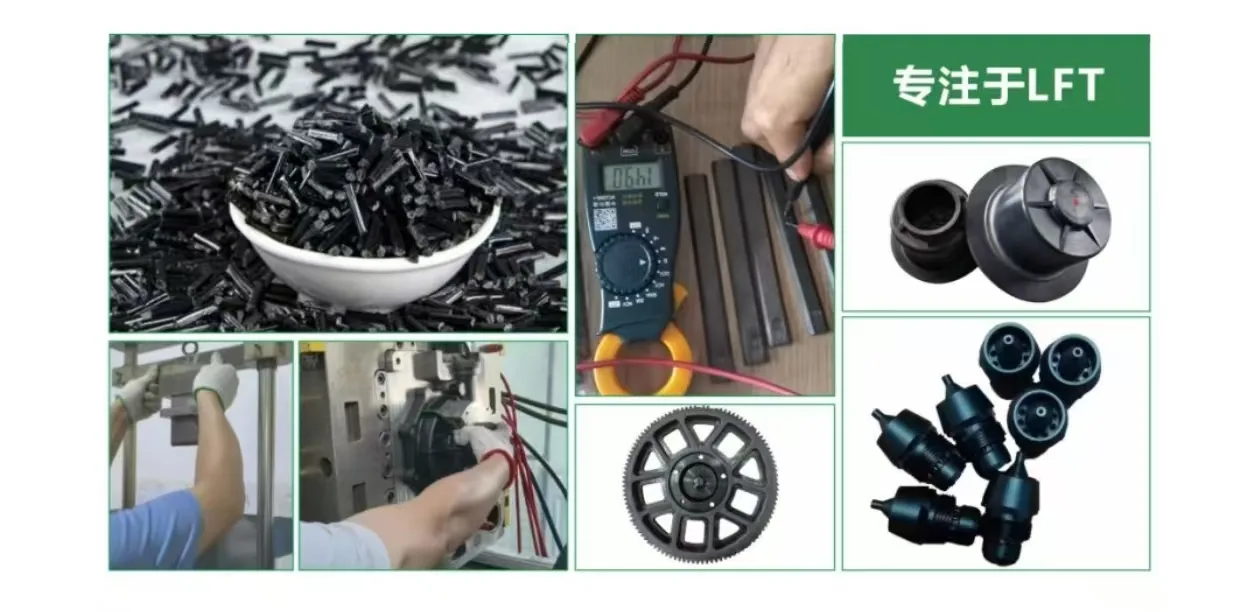
What is LFT Carbon Fiber?
LFT (Long Fiber Thermoplastic) engineering materials are produced through a pultrusion impregnation process — continuous carbon fiber tows are fully wetted by molten resin and then cut into long pellets of 5–25mm.
Unlike short carbon fiber (SCF, 1–2mm), LFT maintains a 3D fiber network within the molded part — creating an interlocking structure that delivers dramatically higher impact resistance, fatigue strength and load-bearing capability.
Manufacturing Process
| Raw Material | Process | Pellet Type |
|---|---|---|
| Long Carbon Fiber Precursor | Impregnation → Pelletizing | LFT Long Fiber Pellets |
| Chopped Carbon Fiber Precursor | Compounding → Granulating | SCF Short Fiber Pellets |
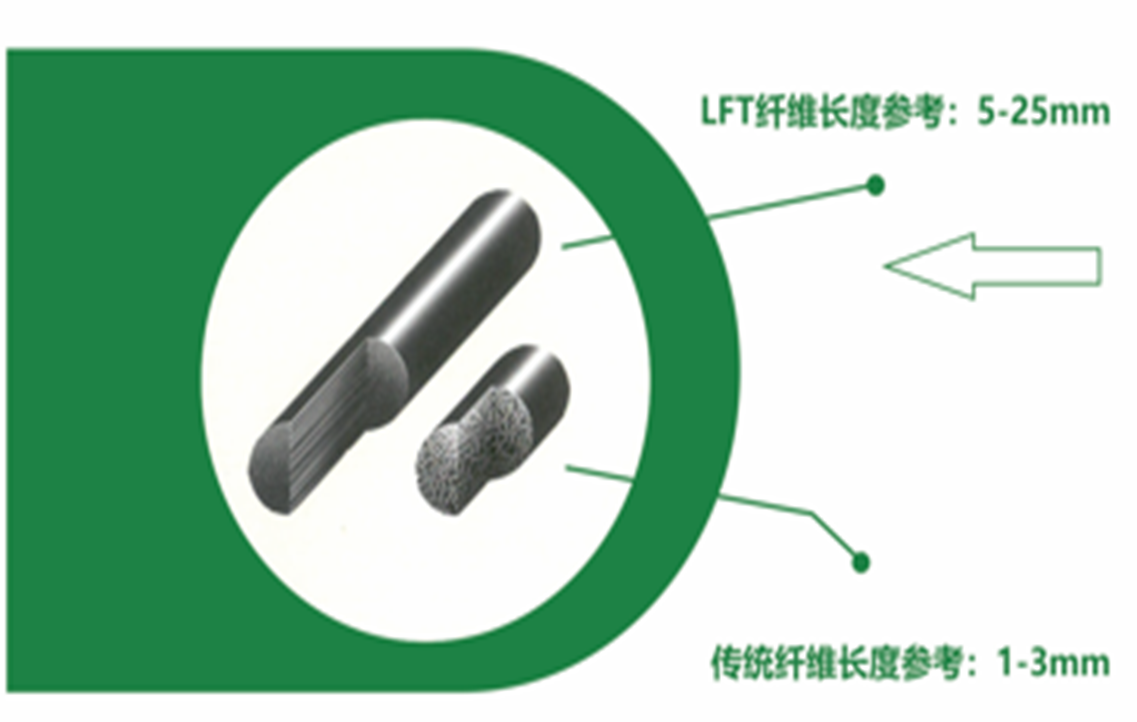
LFT fiber length reference: 5–25mm | SCF: 1–3mm


LFT vs SCF — Why Long Fiber Wins
| Property | SCF Short Carbon Fiber | LFT Long Carbon Fiber |
|---|---|---|
| Fiber Length | 1–2 mm | 5–25 mm |
| Tensile Strength | ~120 MPa | ~180 MPa |
| Impact Resistance | Standard | High — 3D fiber network |
| Fiber Retention Rate | 50–60% | 80–90%+ |
| Toughness | Average | High impact, fatigue resistant |
| Applications | General structural parts | High-performance structural / metal replacement |
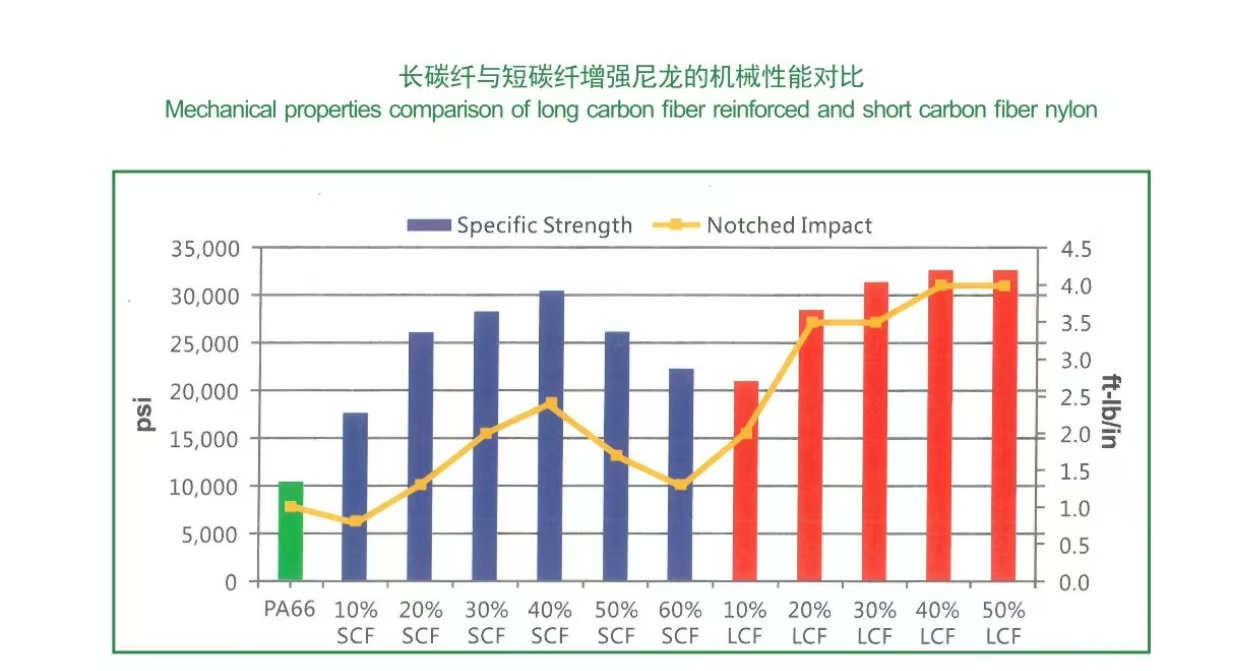
LCF (long carbon fiber) significantly outperforms SCF in specific strength and notched impact tests
Supported Resin Matrix Systems
Base Resin Options
| Resin | Type |
|---|---|
| PA6 / PA66 / PA12 / PPA / MXD6 | Polyamide (Nylon) Series |
| PBT / PET | Polyester Series |
| TPU | Thermoplastic Polyurethane |
| PPS / LCP / PEEK | High-Performance Engineering Plastics |
| PP | Polypropylene |
Fiber Reinforcement Options
Carbon Fiber
Highest strength-to-weight ratio
Glass Fiber
Cost-effective, good insulation
Basalt Fiber
High temp resistance
Quartz Fiber
Radar transparent
Performance Test Results
LCF vs SCF reinforced nylon — mechanical performance comparison
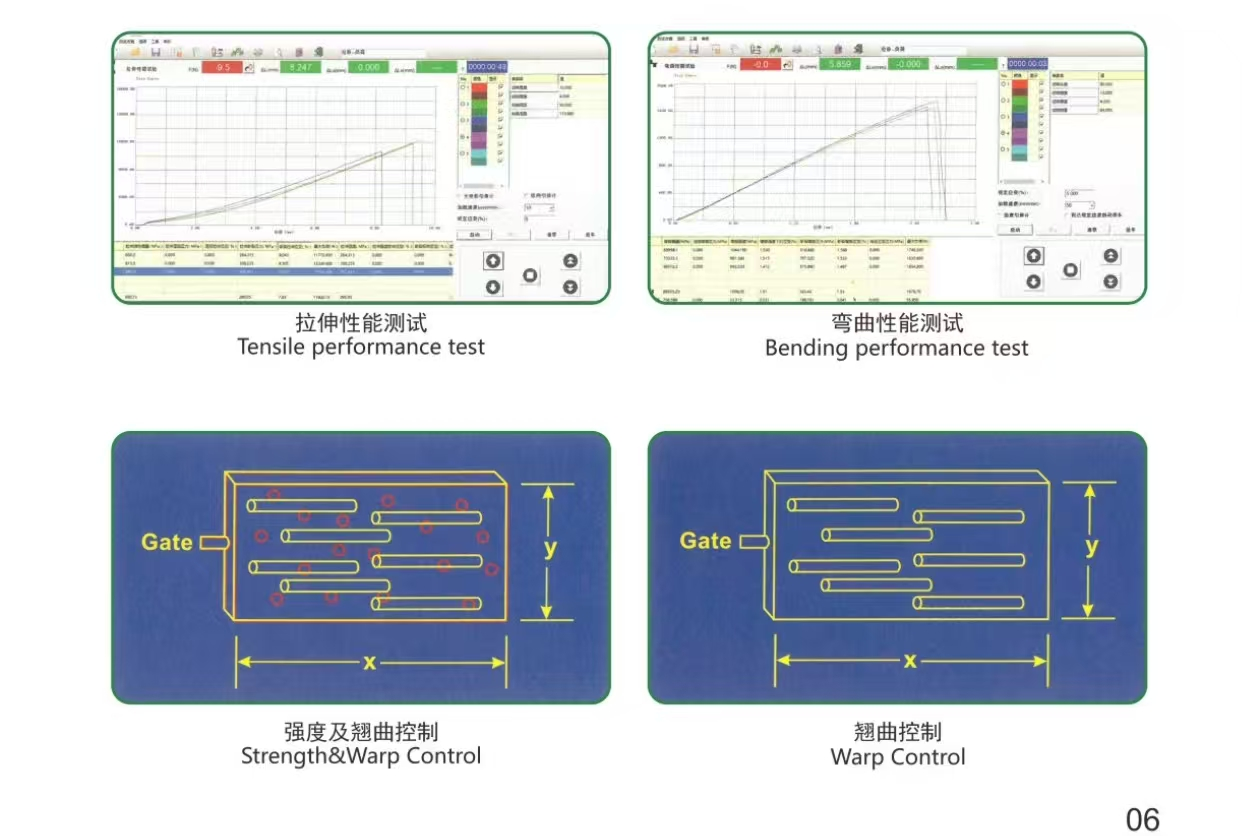
Tensile/flexural tests and gate design effect on strength and warpage
LFT Carbon Fiber — Frequently Asked Questions
LFT retains 5–25mm long carbon fibers in the molded part, forming a 3D fiber network. SCF retains only 1–2mm fibers. LFT delivers ~180 MPa tensile strength vs ~120 MPa for SCF, with significantly higher impact and fatigue resistance.
Yes — LFT is engineered for metal replacement. Benefits include 30–60% weight reduction, no corrosion, one-shot complex part molding, and lower per-part cost at volume.
PA6/PA66/PA12/PPA/MXD6, PBT/PET, TPU, PPS/LCP/PEEK, PP. Fiber options: carbon, glass, basalt, quartz.
Standard formulations: 25 kg for sampling, 500 kg for production. Custom formulations: 200 kg minimum. Email Innerk@doolike.cn for exact MOQ.
2–4 weeks for formulation development. 6–10 weeks if including mold design and molding trials. One-stop service from R&D to finished parts.
Aerospace, UAV, EV, military/defense, industrial machinery, high-end sporting goods. Any use case needing aluminum/magnesium strength at lower weight.
One-stop: material R&D → LFT-optimized mold design with Moldflow → precision mold making → injection molding with dedicated LFT screws. 80%+ fiber retention end-to-end.
ISO 9001, IATF 16949, RoHS, SGS. All products tested to ASTM/ISO standards.
Ready to Upgrade Your Structural Parts with LFT?
Send us your part drawing or application requirements — we'll recommend the best LFT composite and provide a mold-and-molding quote.