“How much does a carbon fiber part cost?” has no single answer, but the drivers are predictable. Understanding them lets you design and order for a lower price without guessing — and know what a fair quote looks like.
What drives the unit price
- Size and fiber amount — more carbon and larger parts cost more.
- Fiber type — high-modulus and small cosmetic tows cost more than standard large-tow structural fiber.
- Process — hand layup and autoclave cost more than roll-wrapping, which costs more than injection-molded SFT/LFT at volume.
- Finish and tolerance — cosmetic weave, gloss, sealed edges and tight tolerances add labor.
- Volume — the biggest lever; unit price falls as tooling amortizes and setup spreads over more parts.
Tooling and one-time costs
Molded parts need a mold and roll-wrapped tubes may need a mandrel — a one-time cost quoted separately because it makes every later part. CNC-cut plate and standard tubes often need little tooling, which is why they are cheap in low volumes. For prototypes, soft or aluminum tooling keeps this cost down before you commit to hard tooling for mass production. See the OEM sourcing guide for how the stages fit together.
MOQ by process
| Process | Tooling | Typical MOQ | Lead time |
|---|---|---|---|
| CNC-cut plate | Little/none | Low | ~1–2 weeks |
| Roll-wrapped tube | Mandrel if custom | Low–medium | ~1–3 weeks |
| Compression/autoclave | Mold | Medium | Tooling + run |
| LFT/SFT injection | Mold | Higher | Tooling + fast run |
Lead time and sampling
Standard tubes and cut plates often ship in about 1–3 weeks. Molded parts add mold-making time (typically a few weeks) before the first production parts. Always budget time for a sample approval loop — approving a physical first article against your drawing before mass production prevents expensive mistakes.
How to reduce cost and lead time
- Raise volume to amortize tooling and setup.
- Use standard sizes and weaves where appearance allows.
- Put cosmetic weave only where it shows; use cheaper structural fiber underneath.
- Loosen non-critical tolerances; hold tight ones only where they matter.
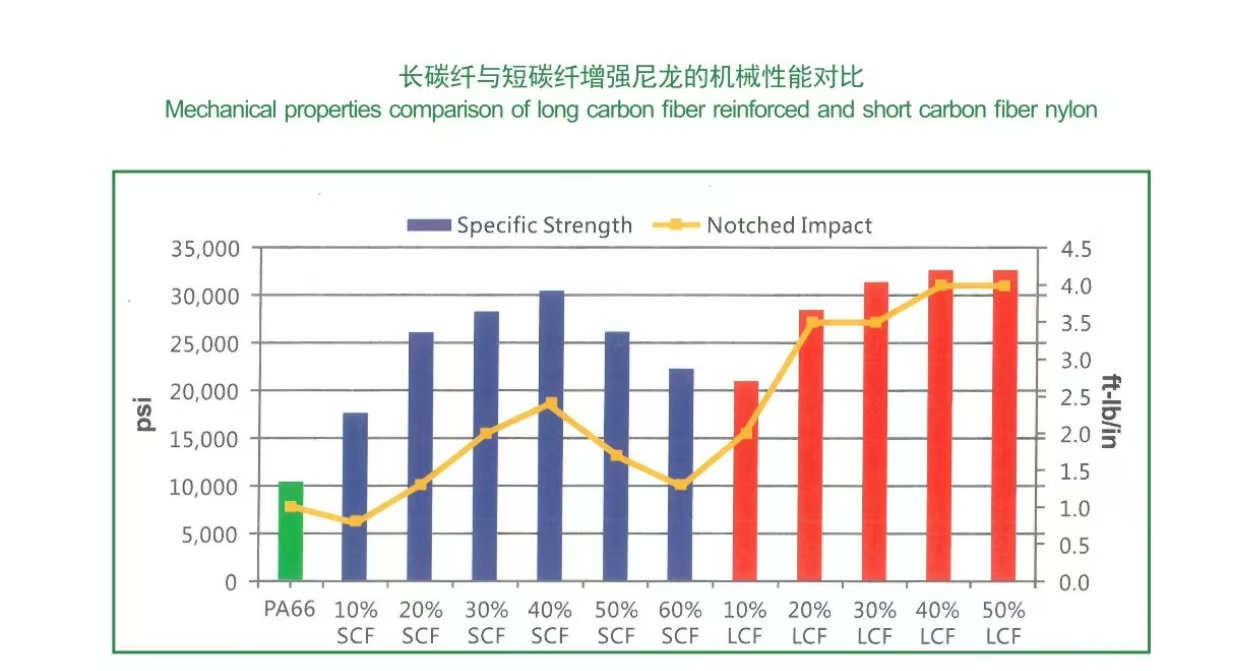
- Pick the cheapest process that meets the load — often LFT or SFT over prepreg.
- Consolidate parts — one molded part can replace an assembly, cutting labor and fasteners.
A quick DFM review usually finds several of these. Send your part and target volume and we will quote it and suggest where to save. Get a quote.