“Carbon fiber” is not one process. The same fiber can be turned into a part three very different ways, and choosing the right one is the difference between a part that is over-engineered and expensive or under-built and failing. Here is how LFT, SFT and prepreg differ and how to choose.
Three ways to reinforce with carbon
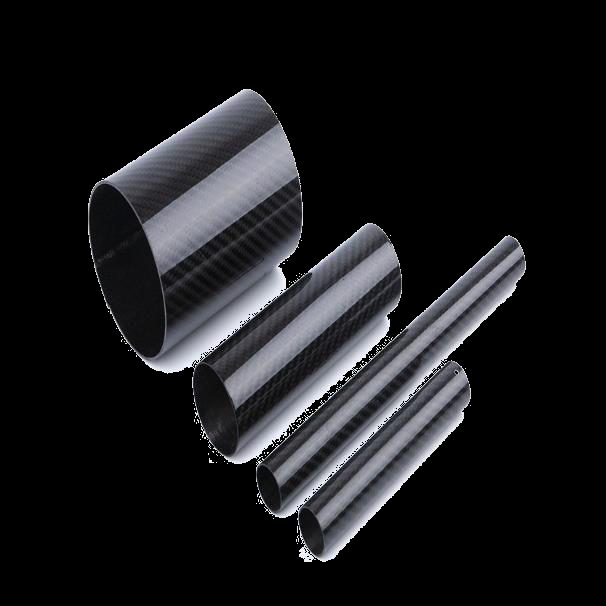
- Prepreg (continuous fiber): fabric pre-impregnated with resin, laid up by hand or machine and cured under heat and pressure (roll-wrapping, compression, autoclave). Fibers run unbroken along the load path, so it is the strongest and stiffest — used for tubes, plates and structural shells.
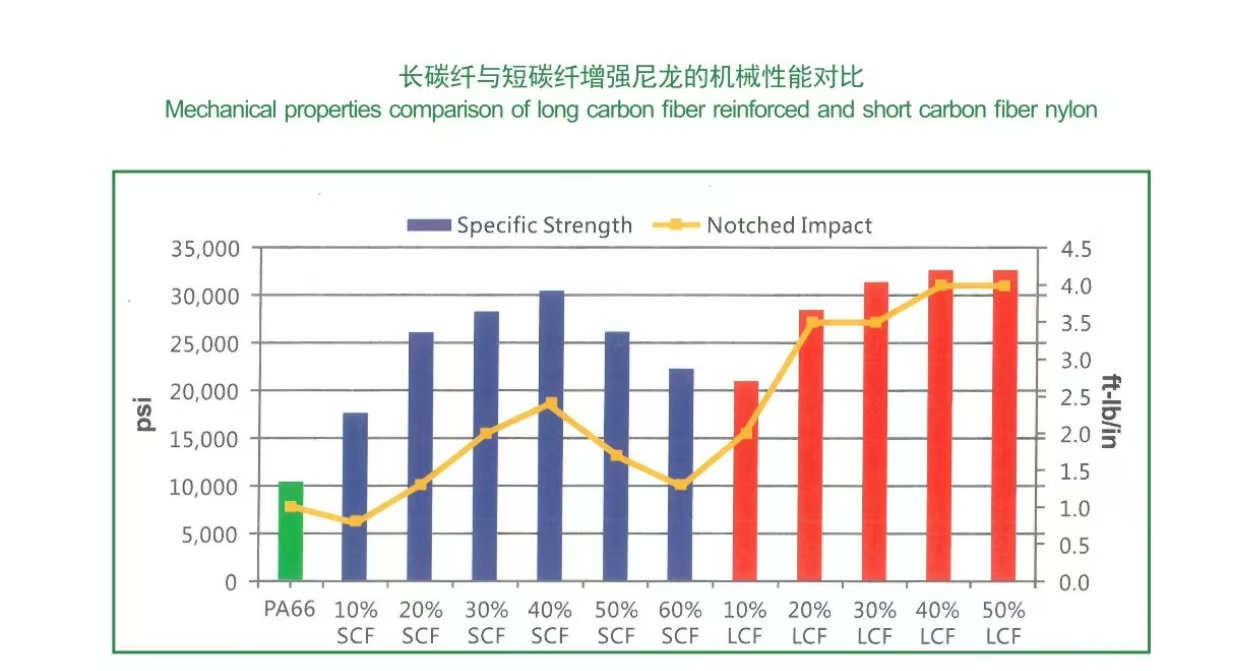
- LFT (long fiber thermoplastic): pellets carrying 5–25 mm fibers, injection molded so the long fibers form a 3D network. Strong, tough and fatigue-resistant, and it molds complex 3D shapes at volume. The workhorse for metal replacement.
- SFT (short fiber thermoplastic): pellets with 0.2–1 mm chopped fiber, injection molded with excellent flow and fine detail. Lower strength but lowest cost and best for detailed, high-volume parts — see SFT compounds.
Side-by-side comparison
| Factor | Prepreg | LFT | SFT |
|---|---|---|---|
| Fiber length | Continuous | 5–25 mm | 0.2–1 mm |
| Strength | Highest | High (~180 MPa) | Medium (~120 MPa) |
| Shape complexity | Tubes, plates, shells | Complex 3D | Complex 3D |
| Detail / thin walls | Medium | Good | Excellent |
| Unit cost at volume | Highest | Medium | Lowest |
| Cycle time | Slow (cure) | Fast | Fastest |
| Best for | Performance structures | Structural molded parts | Detailed volume parts |
How to decide
- Is it a tube, plate or shell needing maximum performance? → Prepreg.
- Is it a complex 3D part replacing metal, under real structural load? → LFT.
- Is it a detailed, thin-walled, high-volume part under moderate load where cost and cycle time rule? → SFT.
- Not sure, or a mix of loads? Often the best answer is a hybrid — for example an LFT structural part with a prepreg reinforcement, or SFT for the body and prepreg inserts for the load path.
Typical parts for each
Prepreg: drone arm tubes, camera slider rails, robotics plates, bike components, aerospace panels. LFT: EV battery brackets, UAV frames, helmets, structural housings — see our application cases. SFT: gears, connectors, electronics housings, pump and valve parts, under-hood components.
Get a recommendation
The honest truth is that the right process depends on your exact part. Send us the geometry, load case and annual volume and our material engineers will recommend LFT, SFT, prepreg or a hybrid, with the reasoning and a quote. Start here.